Eat like a local
The saying “You have to taste a culture to understand it” certainly holds very true. Food in Istria is a melting pot of cultural influences that have been blended with the Istria’s natural bounty of fruits, spices and food. Here are our top picks of places to experience authentic Istria cuisine:
COTTON CLUB POREČ
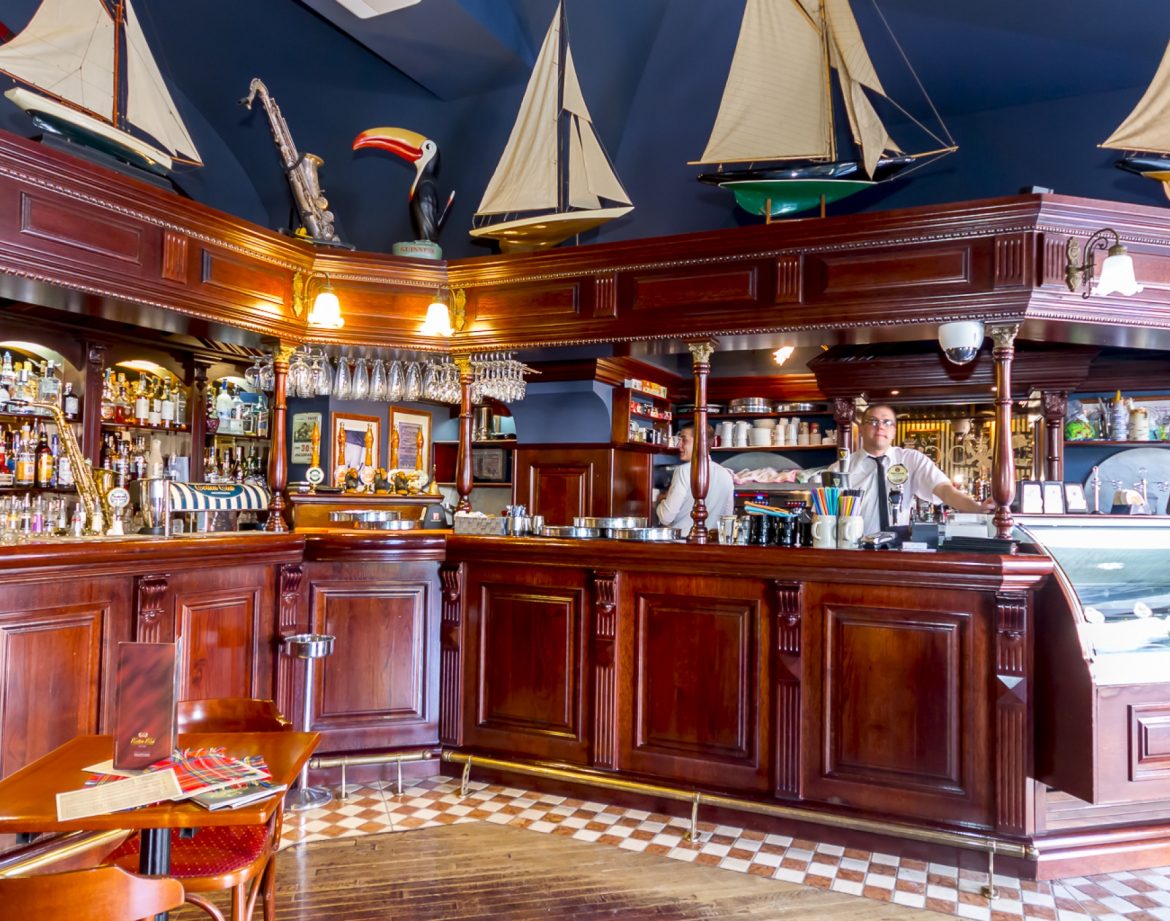
A visit to Cotton Club Poreč will soon turn into a top quality personal gastronomic festival for any visiting guest. First of all, because of its top quality and standards, as much as because of a specific atmosphere. Those qualities soon turned the place, which initially was only a pub, into a place everyone loves and come into sincerely relaxed and thankful for its unique menu offer. And just in the same way, enthusiastic and openly, Cotton Club invites its guests to raise quality to a whole new level each day, providing an intense brewing of scents and flavors. Located at the beginning of the entrance to Decumanus Street, the restaurant is a witness to the tradition of these places and caringly combines a modern approach to quality with the best of the Istrian past.
The restaurant and bar Cotton Club was founded by Istrian people with a basic postulate in mind: to cook the tradition of Istrian gastronomy in the restaurant kitchen and to preserve old, authentic Istrian dishes. With the notion of a contemporary approach, they succeed, so always fresh ingredients of top quality are chosen for the preparation of meals. That is why restaurant guests frequently, with full confidence, leave to the staff to suggest and choose food and drinks, especially the specialties for which the restaurant is well-known. This mutual trust results in the absolute pleasure of guests returning to the warm, and at the same time refined Cotton Club atmosphere.
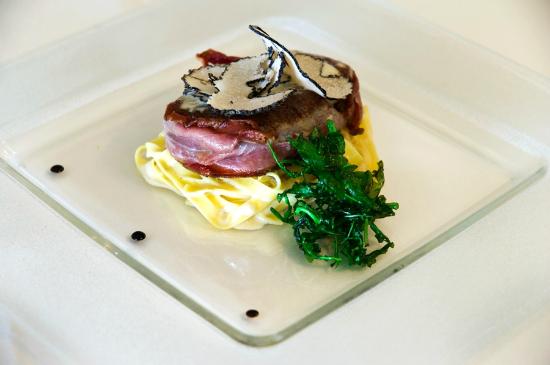
The staff of Cotton Club is a team of catering professionals, long-time employees with rich experience. The local population is well acquainted with this team as a set of professional and expert people who are skillful in preparing and serving food to a level of art. This has been largely contributed by the continuous training of staff at prestigious courses, and it is worth mentioning that they are professionally trained for gastronomy with Boškarin meat, sous vide cooking (cooking in a vacuum), gastronomy of Istrian meat or preparation of aromatic Istrian truffles. In the famous Italian company IRCA, whose tradition of preparing food dates back to 1919, they were trained in pasta and cake making. At Cotton Club, guests can also enjoy the finest ice creams, for whose craftsmanship our professionals have been educated at the renowned Italian company MEC3. All staff has passed the coffee preparation course, and waiters serve guests according to the guidelines and high standards of the American Bartender School. The quality of their approach has also been complemented by a modern food service course.
Everyone who stepped into Decumanus Street has made a step in the rich history of Poreč, where the old city core tells the story, with a whisper, of the ancient past that still feels and breathes. The first historical records mention a small fishing village with a harbor from the 6th century BC before the present day in the town of Poreč. In the 2nd century BC, the Romans arrive in this area and occupy the entire Istrian peninsula during their many conquests. Poreč then gets the Latin name Parentium. Today’s city core is a network of streets that slice at right angles and form a square. It still keeps its antique form, and the main street is today called Dekumanova street, the Latin Decumanus. Go step by step through Dekumanova Street and the view of the magnificent Euphrasius Basilica opens. This lifelong monument of Christianity was erected in the 6th century, during the reign of the Byzantine Empire, Bishop Euphrasius. Built of stone and decorated with marble columns, the basilica is, amongst other things, famous for amazing mosaics still preserved on its walls. All this is just a fraction of the rich history of Poreč, which is still called the pearl of the western coast of the Istrian peninsula. Since the middle of the 19th century, Poreč has left tourists delighted, and its beauty was especially appreciated by the Austrian aristocracy. This city was often changed by rulers, starting with the Romans, the Byzantine Empire, the Venetians, Napoleons, and Austro-Hungarians. After the First World War, Poreč was part of Italy. Every government left deep traces and influence, so Poreč is a whirl of rich cultural and architectural features. During the Middle Ages, the stunning Gothic palace was erected and today stands as a proof of ancient times that leaves all tourists in awe, and it’s Round Tower is a delightful place for visitors to visit, whose terraces offer spectacular views of the town’s shore. For years, Poreč has become one of the main centers of Croatian tourism, which is active in every season. And along with culture, architecture and beautiful sea, the specificity of this area is certainly the food through which history and tradition are carefully nurtured.
The restless Istrian past has left a great mark on the gastronomy of this area through the intertwining of different traditions in the folk cuisine, which has its base in nature. Wild herbs, aromatic spices, and seasonal vegetables have always been an integral part of the local cuisine. The most influential of Istrian gastronomy has been Venice with its imaginative and ancient dishes. And they were such because, in Venice, known for trade, they got a hold of spices and groceries from around the world. Poreč was the first city to come in contact with pepper, cinnamon, coriander, nutmeg… The trade worked great in the reverse direction, sending venison and superb olive oil from this area. Typical Mediterranean cuisine that was prepared in the coastal area were thick soups, stews, rice, roast… The people in the interior of Istria, mostly farmers, baked cornbread on the fire under the bell, and ate chicken meat, cheese, “ravioli”, “gnocchi” and “fuži” for special occasions. One of the most common dishes was the “maneštra” which everyone still loves today in Istria. Food through history has shaped the gastronomy of Istria today, and the modern generation of Istria has gratefully accepted the inheritance of their grandparents. This is the guiding thread in Cotton Club, where old recipes and original Istrian recipes are exceptionally valued and modernized to meet the finest palate. Because all of this, the Cotton Club staff is well-trained and has completed the prestigious courses of food and beverage preparation.